Beekeeping
Beekeeping is an interesting job where, in addition to the well-being of the animals, the beekeeper monitors natural conditions and, as a reward for demanding work, receives delicious honey! Bee behavior and honey yield are always related to the prevailing climate, temperature, rainfall, and nectar production of plants.
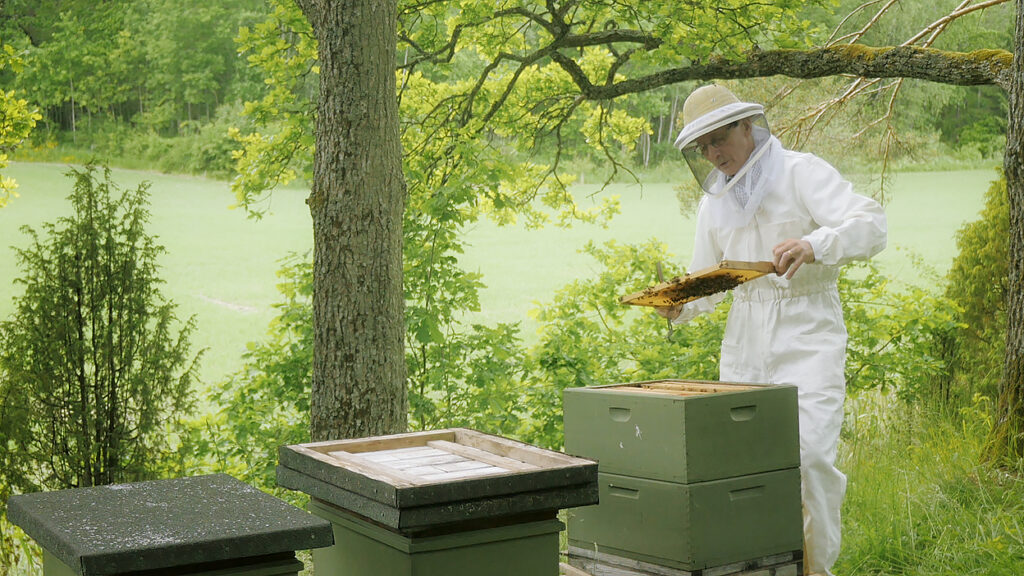
Honeybees are given beehives as their home, which consist of a base, frames, and a roof. Inside the frames, ready-made wax foundations with wooden frames are placed to facilitate the handling of bees and honey, and the bees build combs on these. The wax foundations are made from wax produced by the bees themselves. The beehives are placed in nature in apiaries of 5-10 hives.
Explore Hunajayhtymä's contract producers here.
Bees are responsibly cared for all year round
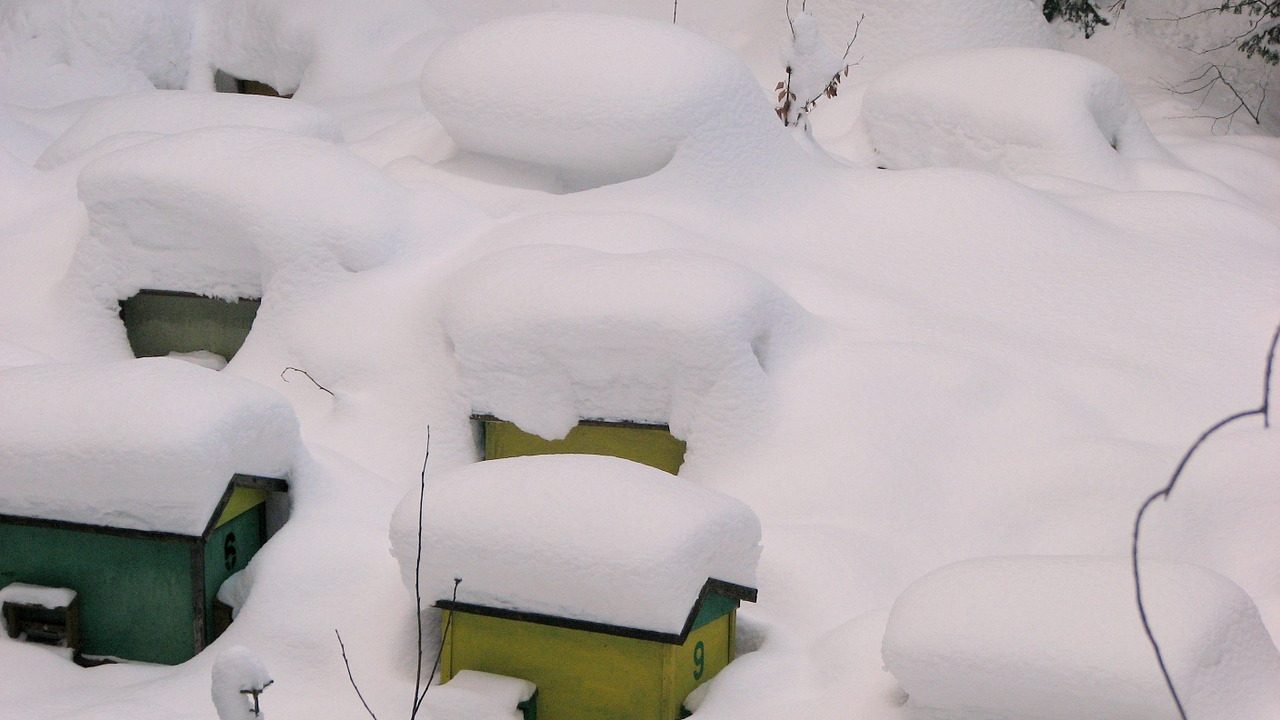
From a beekeeper's perspective, the beekeeping year can be considered to start in late summer after the harvest, when the queen's egg-laying from that summer is nearing its end and the bees begin to prepare for winter hibernation. The collected honey is replaced with a sugar solution, from which the bees make and store a honey-like mixture for their food. The sugar must be put into the hive early enough for the bees to still cover the food cells with wax cappings during the summer weather, thereby ensuring the food's preservation. During the winter season, the beekeeper ensures that mice and other small animals do not get into the beehive. Additionally, the bees' well-being is maintained by controlling the varroa mite. During the bees' winter hibernation, the beekeeper cleans and replenishes hive equipment, and makes purchases and plans for the coming spring and summer.
Bees spend the winter season in a so-called winter cluster, where they keep themselves warm and eat the winter food stored in the combs in late summer. There are about 20,000 bees in such a winter cluster. The winter cluster moves within the hive according to the location of the food. The outermost bees in the cluster are tightly packed together and generate heat. Even though it is freezing outside, the temperature inside the winter cluster is about 20 degrees Celsius.
The bees' hustle and bustle begins as soon as the spring sun appears.
The new beekeeping season begins in the spring, once the weather has warmed up enough for the bees to fly outdoors. When the temperature rises to 8–10 degrees in the spring, the flight holes are opened and the bees are allowed to go on a cleansing flight—that is, to relieve themselves after a winter-long hiatus. Bees generally do not defecate in the hive during the winter, and since they eat a lot, the need to empty their bowels in the spring is quite significant.
Winter bees are nearing the end of their lives in early spring, and usually, more die off than new ones emerge, so the colony's population size might decrease until May. In early May, during the first inspection, the beekeeper cleans the bottom board, ensures sufficient brood temperature, places an additional feeding frame, and, if necessary, rearranges the sections. At this time, monitoring the varroa mite population should also begin. This is best done with a mite monitoring board placed under the hive, the catch on which indicates the need for control measures.
The Varroa mite parasitizes bee colonies, infecting bees with various viruses. Brood is particularly susceptible to damage caused by mites. The beekeeper manages excessive mite populations by controlling them with natural pesticides. These substances do not harm the bees themselves or the environment.
During the summer, the condition of the hives is monitored once a week, and feeding is ensured. As the bee population increases significantly in June, it is necessary to add supers to the hives for honey ripening and storage. Moving and lifting the supers requires strength, as a full honey super can weigh up to 35 kg. All movements at the hive must be done calmly and steadily, as sudden and jerky movements agitate the bees.
A beehive on the run?
Swarming season begins in late May and usually lasts until mid-July. Swarming is a natural way for bees to reproduce and expand their territory, as the old queen and older bees leave the hive for a new location, while the younger bees stay in the old hive and raise a new queen for themselves. For the beekeeper, swarming means a decrease in honey producers, so they must strive to keep the hives in such a condition that the bees stay and thrive in them.
Bees cannot survive the winter in the wild, so it’s best to collect them and place them in a hive as soon as possible. There are many professional swarm catchers in Finland who expertly relocate bees to the right environment. If a swarm of bees has settled in your yard or nearby, you can contact us here.
Summer is the busiest season for honey production
The honey flow in Finland lasts approximately 3–4 weeks, and towards the end, you can check if there's enough capped honey ready for harvesting. By mid-August, all honey is collected, and the hives are organized for autumn feeding. When the weather cools down again, the worker bees drive the drones out of the hive, and preparations for the new winter begin – the bee year is complete.
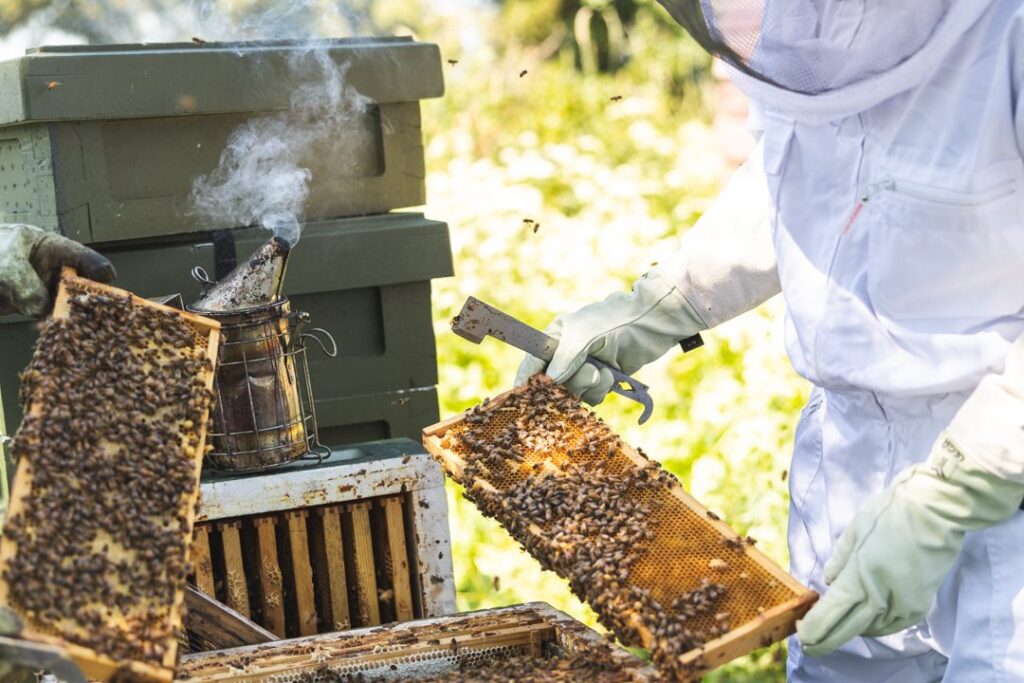
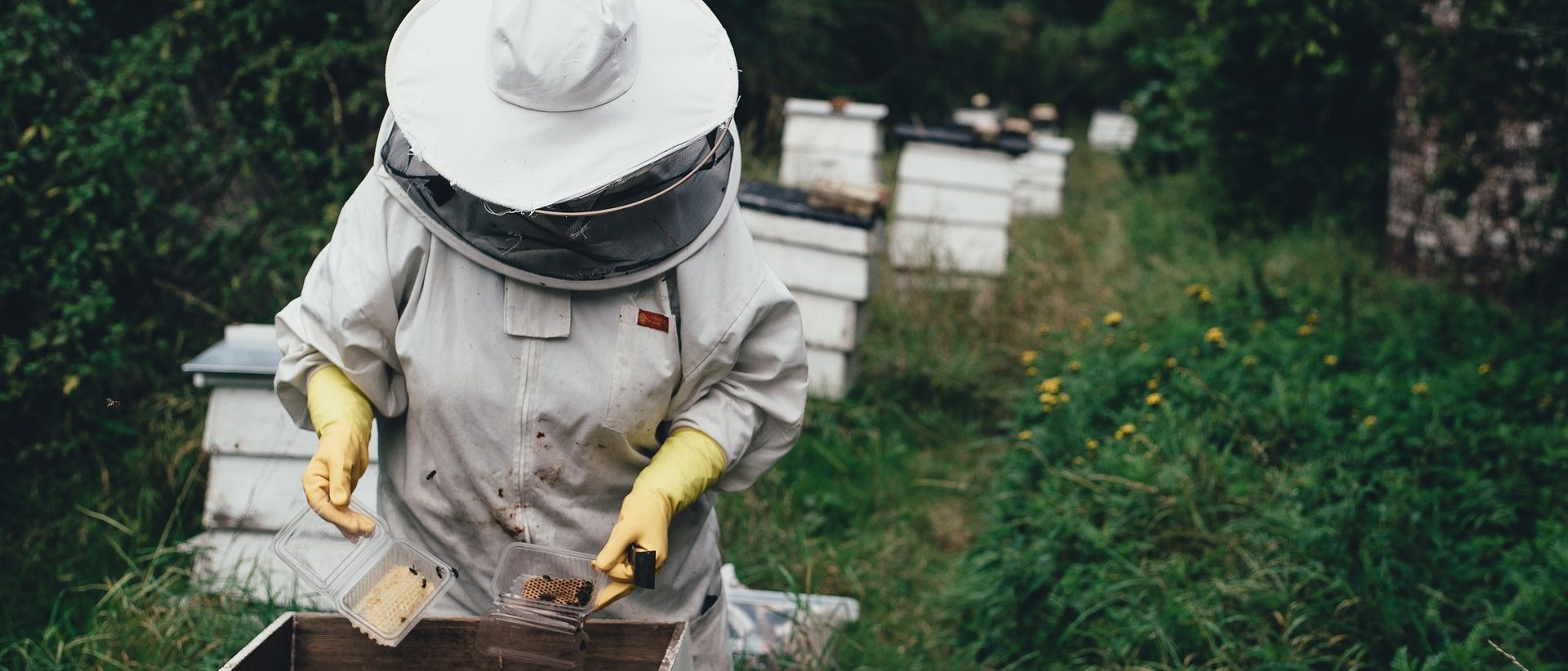
During the harvest season, even typically calm bees can become agitated, as beekeepers are taking away the honey they have painstakingly collected. The beekeeper usually has to wear protective gear to prevent bees from getting under their clothes and stinging in their distress. Protective clothing is often white because light colors do not provoke bees' aggression like dark ones do. When the combs are not touched and the bees are otherwise not disturbed, the bees do not attack and there is little need to protect oneself from them.
A bee only stings to protect its colony when it feels threatened. When a bee stings, its stinger injects bee venom. Most beekeepers experience few symptoms from bee venom, but a true allergy can be life-threatening. After stinging, a bee's stinger detaches, and the bee dies.