Using honey
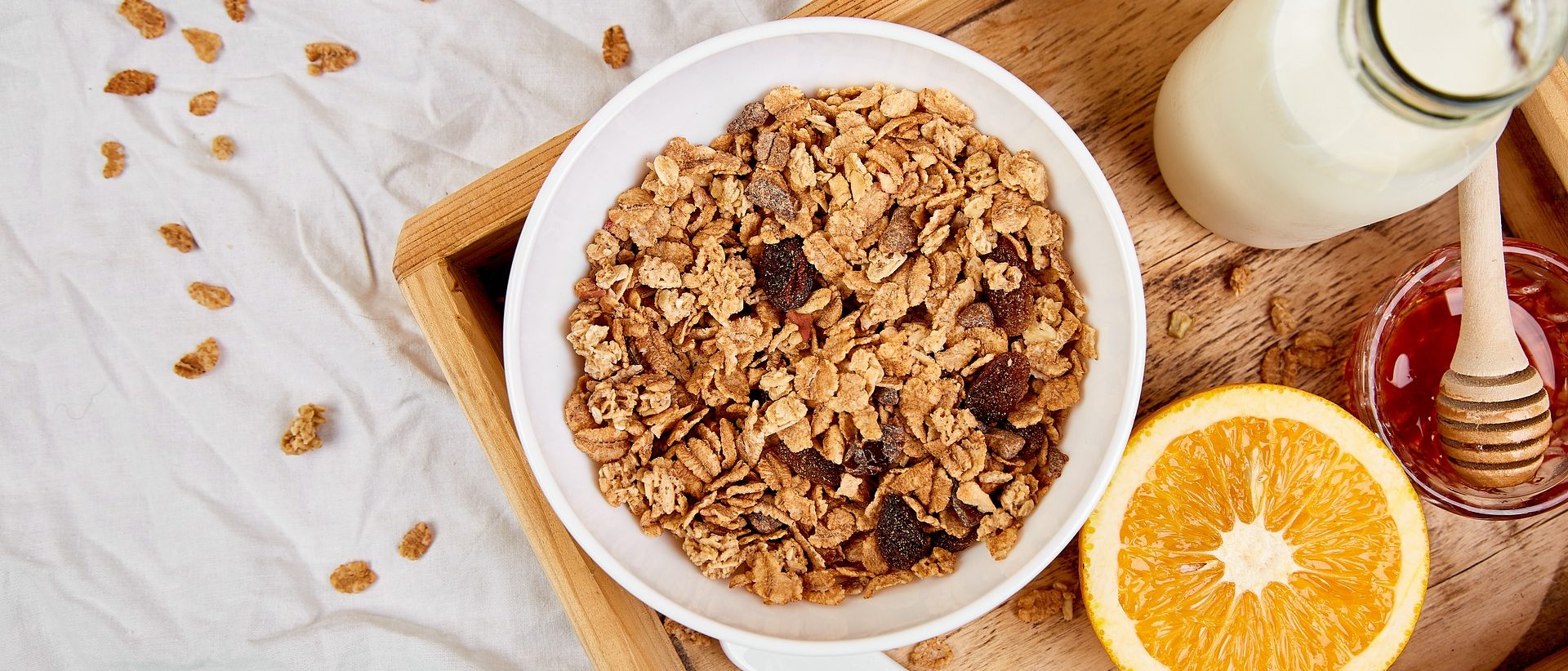
Honey is most often used as a sweetener and preservative instead of sugar, and also in cooking, for example, in leavening dough and marinating. Honey sugars are small molecules and are quickly absorbed by the body, so honey is an excellent snack for athletes, for example, during or after exercise. Hunajayhtymä has an extensive recipe bank for foods, drinks, sauces, and baked goods. in our recipe bank.
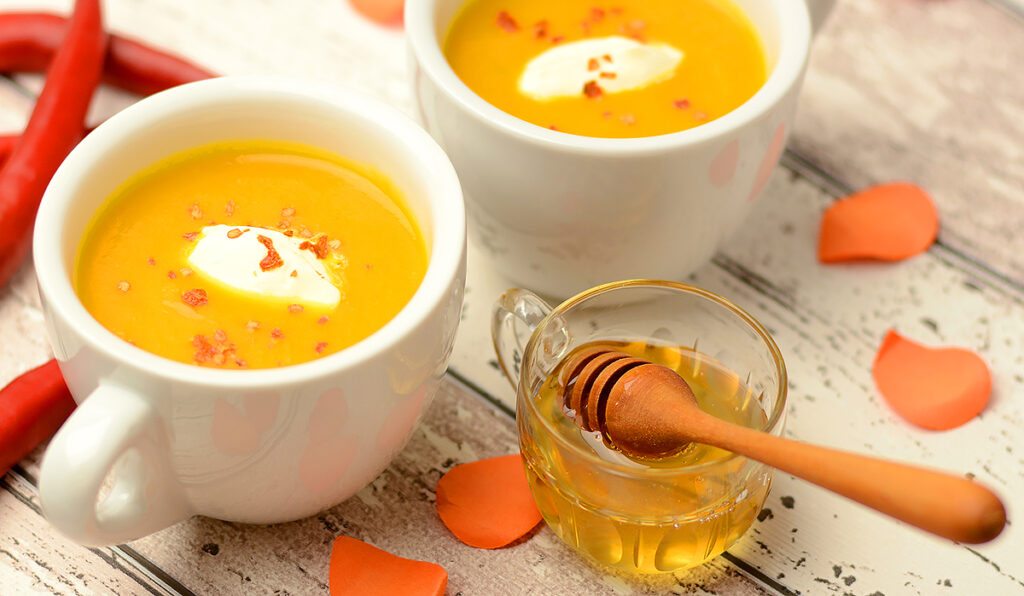
Honey is nature's own wonder ingredient.
Due to its antibacterial properties, honey is also an effective and natural way to treat injuries and illnesses. Honey can be used externally to treat wounds, burns, abrasions, and skin conditions, as well as for beauty care. When consumed internally, honey is suitable for preventing and treating infectious diseases and improving digestion.
Honey contains healthy pollen, which, among other things, strengthens and restores the body's balance, evens out hormonal function, helps with prostate problems, and increases fertility as well as milk production in nursing mothers.
Honey containing pollen can also be used to prevent hay fever by consuming it daily for months before pollen starts to fly. For those with severe hay fever, honey causes symptoms, so they should try strained honey.
More information about honey's usability and its excellent properties from this article
Hunajaa ei suositella alle yksivuotiaille lapsille botulismiriskin vuoksi.
Honey may contain spores of the bacterium Clostridium botulinum, which are completely harmless to adult humans but can cause severe food poisoning in young children, infant botulism. In infants, the intestinal microbiota is not yet fully developed, and therefore C. botulinum spores can accumulate and develop botulinum toxin, which causes poisoning. Five cases of infant botulism were reported in the Nordic countries between 1997 and 1999, one in Denmark and four in Norway, and in all cases, the source of infection was honey. There have been no cases in Finland, but since bacterial spores have been found in a small amount of honey in studies by the Finnish Food Authority, it has been decided to add the warning text ”Not for infants under 1 year old” to honey jars sold in Finland.
Bees transport pollen in pollen baskets on their hind legs as a source of protein and as nourishment. The beekeeper collects pollen with a collection device placed at the entrance of the hive, where the pollen pellets carried by the bees fall before entering the hive. There is no harm to the bees from collection, as there is always enough food remaining for the hive's needs. Pollen contains proteins, amino acids, carbohydrates, vitamins, flavonoids, enzymes, minerals, antibiotic-acting substances, and hormone-like substances.
Deliciously flavored Mielinen combines Finnish honey and fiber. Chef Jesse Söderlund prepares snack bars from the product, and bartender Sakke Mäkinen mixes a hot honey drink.